

An Overview of Your Care
At Prism Eye Institute, our doctors provide screening and specialist care for a range of eye diseases and conditions. Common screenings include: diabetes, cataracts, glaucoma, and macular degeneration.
Regular eye exams are key to protecting your vision long-term, especially if you have a family history of eye disease. Many eye diseases cannot be cured but can be treated or managed to preserve your visual health.
Referrals to Our Specialists
You may have been referred to us by a doctor after their assessment determined signs or symptoms of a condition affecting your vision. Our doctors can diagnose, treat, and monitor your progress, supported by the diagnostic technology available at our practice.
We can accept referrals for various eye diseases and conditions, including the following:
- Diabetic retinopathy
- Macular degeneration
- Retinal tear/retinal detachment
- Glaucoma care (medical/laser/surgical)
- Keratoconus
- Uveitis

How Are Eye Diseases Diagnosed?
Many factors contribute to a thorough diagnosis. We’ll discuss your medical history and any vision problems or symptoms you may be experiencing. Various tests may be performed to evaluate your visual health.
Certain tests can help identify the risk of diseases and conditions. For instance, noncontact tonometry can determine intraocular pressure. Measuring your eye pressure can help us rule out diseases or conditions like glaucoma.
Once the testing is completed, your doctor will discuss your diagnosis with you.
How Are Eye Diseases Treated?
Recommended management or treatment will depend on the condition or stage of the disease. Your individual needs are also a crucial consideration.
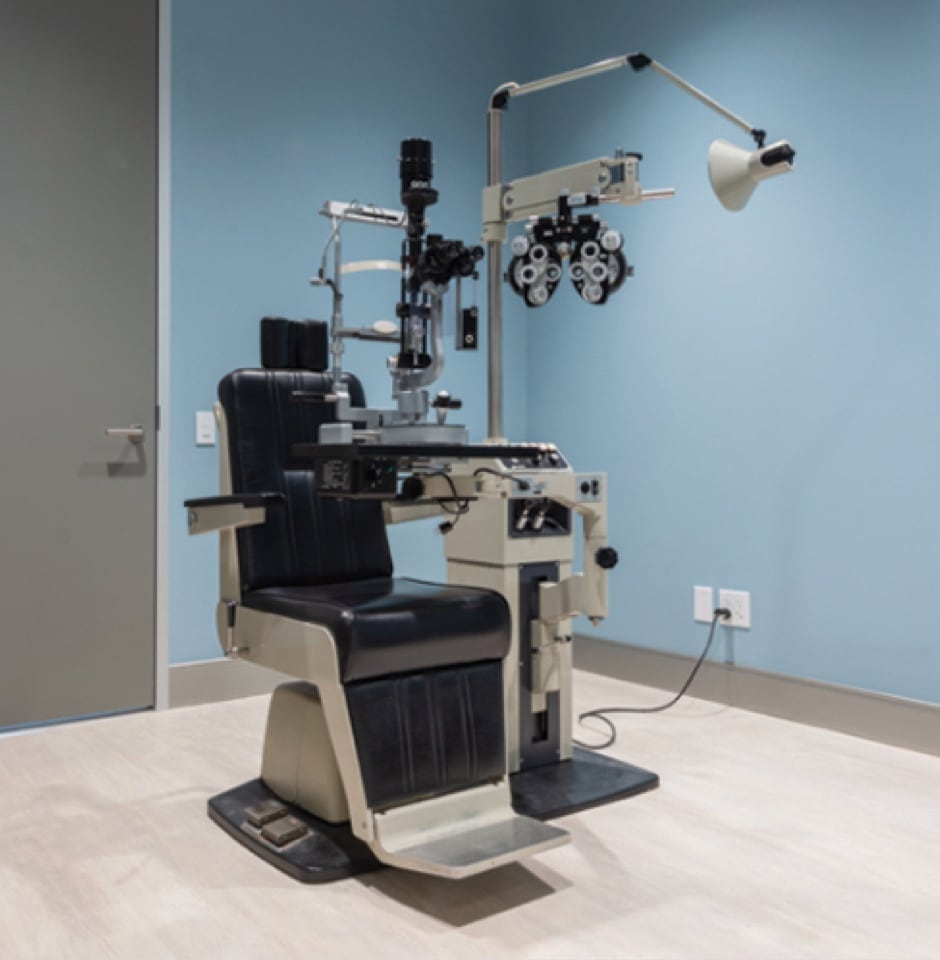
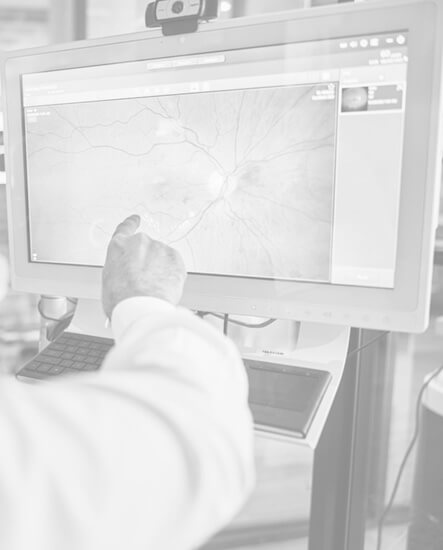
Our doctors use various diagnostic tools and screening methods to help manage your eye health. We then develop a customized treatment plan and monitor your progress so we can adapt to your changing needs. Using innovative technology, we gain detailed information about your eye health that helps us provide in-depth care.
Common Eye Diseases & Conditions
Diabetic Retinopathy
People with diabetes can develop diabetic retinopathy. Elevated blood sugar levels can deteriorate blood vessel health, including blood vessels supplying oxygen and nutrients to the retina (light-detecting tissue). Abnormal blood vessels can damage the retina or leak fluids, causing tissue swelling.
Diabetic retinopathy can severely impair vision, including increasing floaters, reducing colour vision, and causing blank or dark spots. Optical coherence tomography (OCT) and dilated eye exams help detect retina health problems so patients can receive timely treatment to prevent vision loss.
Macular Degeneration
Macular degeneration affects the macula, a part of the retina essential for perceiving colour and fine details. When the macula deteriorates, it can cause central vision loss, but peripheral vision remains normal. Macular degeneration is the leading cause of severe vision loss in older adults, which is why it’s often referred to as age-related macular degeneration (AMD).
AMD can be diagnosed by a dilated eye exam or optical coherence tomography (OCT). Testing with an Amsler grid helps determine if a patient sees any blurry, distorted, or blank spots.
Cataracts
A cataract forms when proteins in the eye’s lens break down and clump together, creating a cloudy spot. The clumps block light entering the eye and reduce the lens’ flexibility while focusing. Cataracts can cause blurred near and distant vision, make colours look faded, and significantly decrease vision in low lighting.
Cataracts can be diagnosed through comprehensive eye exams or individual testing, such as dilated slit-lamp exams, refraction or visual acuity tests, and retinal exams. When vision is severely impaired, cataract surgery may help restore vision.
Retinal Detachment
The retina is the light-sensitive tissue located at the back of the eye. It detects light properties to create visual information. When the retina is damaged or detached, it can cause permanent vision loss. A tear or hole may not cause initial symptoms, but seeing flashes of light, sudden spots or floaters, and a shadow or curtain over central vision can indicate retinal detachment.
Retinal damage or detachment can be diagnosed using a special lens to look at the dilated eye. Optical coherence tomography (OCT) can capture detailed images to evaluate retinal health and detect potential problems.
Glaucoma
The optic nerve is a bundle of nerve fibres responsible for sending visual information from the retina to the brain. Glaucoma is a group of eye disorders causing optic nerve damage, leading to irreversible blindness.
The most common form of glaucoma is caused by increased eye pressure. Fluids build inside the eye, pushing on and deteriorating the optic nerve. Testing eye pressure can detect changes to help prevent vision loss.
Glaucoma treatment usually involves reducing eye pressure with medicated eye drops. Laser or general surgery may be necessary.
Keratoconus
Keratoconus is a progressive eye disease affecting the quality of the cornea (clear front of the eye). As cornea tissue thins, the front of the eye warps into a cone-like shape, contributing to blurred or distorted vision. Although there is no definitive cause, family history and severe eye-rubbing are known factors.
Treatment depends on the severity or progression of the condition, as well as the patient’s age and lifestyle. Keratoconus can be diagnosed with a slit-lamp exam, corneal topography, or optical coherence tomography (OCT).
Uveitis
The uvea is the eye’s middle layer, containing the iris, ciliary body, and choroid. Uveitis is when the uvea becomes inflamed, often caused by a bacterial, fungal, or viral infection. The condition can affect only one eye, and patients may experience severe discomfort, light sensitivity, blurred vision, and redness.
Untreated uveitis can lead to significant damage. Depending on the severity of the inflammation, uveitis treatment can include corticosteroid eye drops, medications, or injections.
We Care About Your Health
Your eye health is important. Many eye problems affecting your vision and overall health can develop with no warning signs, but signs may be detected with diagnostic technology. Early diagnosis of an eye disease or condition is crucial to preserving long-term health and vision. Request an appointment today.









Our Locations
Brampton
- 7700 Hurontario Street, Unit 605
- Brampton, Ontario L6Y 4M3
Monday to Saturday: by appointment only
OUR HOURS
- Monday: 7:30 AM – 6:00 PM
- Tuesday: 7:30 AM – 6:00 PM
- Wednesday: 7:30 AM – 6:00 PM
- Thursday: 7:30 AM – 6:00 PM
- Friday: 7:30 AM – 6:00 PM
- Saturday: 8:00 AM – 2:00 PM
- Sunday: Closed
Mississauga-Oakville
- 2201 Bristol Circle, Suite 100
- Oakville, Ontario L6H 0J8
Monday to Saturday: by appointment only
OUR HOURS
- Monday: 7:30 AM – 6:00 PM
- Tuesday: 7:30 AM – 6:00 PM
- Wednesday: 7:30 AM – 6:00 PM
- Thursday: 7:30 AM – 6:00 PM
- Friday: 7:30 AM – 6:00 PM
- Saturday: 8:00 AM – 2:00 PM
- Sunday: Closed
Our Brampton Reviews
Our Mississauga-Oakville Location
Gallery