
What is Glaucoma?
Glaucoma refers to a group of diseases that cause damage to the optic nerve, usually as a result of increased pressure within the eye.
There are two main types of glaucoma: Open-angle glaucoma and Angle-closure glaucoma. Open-angle glaucoma is more common and involves fluid in the eye not draining properly through the trabecular meshwork. Angle-closure glaucoma involves intermittent increases in eye pressure due to poor drainage because the space between the iris and the cornea is too narrow.
Most patients do not experience any symptoms from high eye pressure, and during the early stages of glaucoma they do not notice the side vision loss. This makes it difficult for many patients to know if they have the disease. As glaucoma progresses, patients may experience a loss of peripheral or side vision.
Diagnosing Glaucoma
Since many patients do not experience any symptoms during the early stages of glaucoma, a diagnosis may only be made during a regular eye exam. It is important for patients, especially those with a higher risk of developing glaucoma, to have their eyes checked by an optometrist at least once a year.
Your doctor may recommend several different eye tests in order to detect signs of glaucoma. Visual field testing is commonly performed to measure the extent and sensitivity of peripheral vision. This is where glaucoma patients show the earliest signs of vision loss.
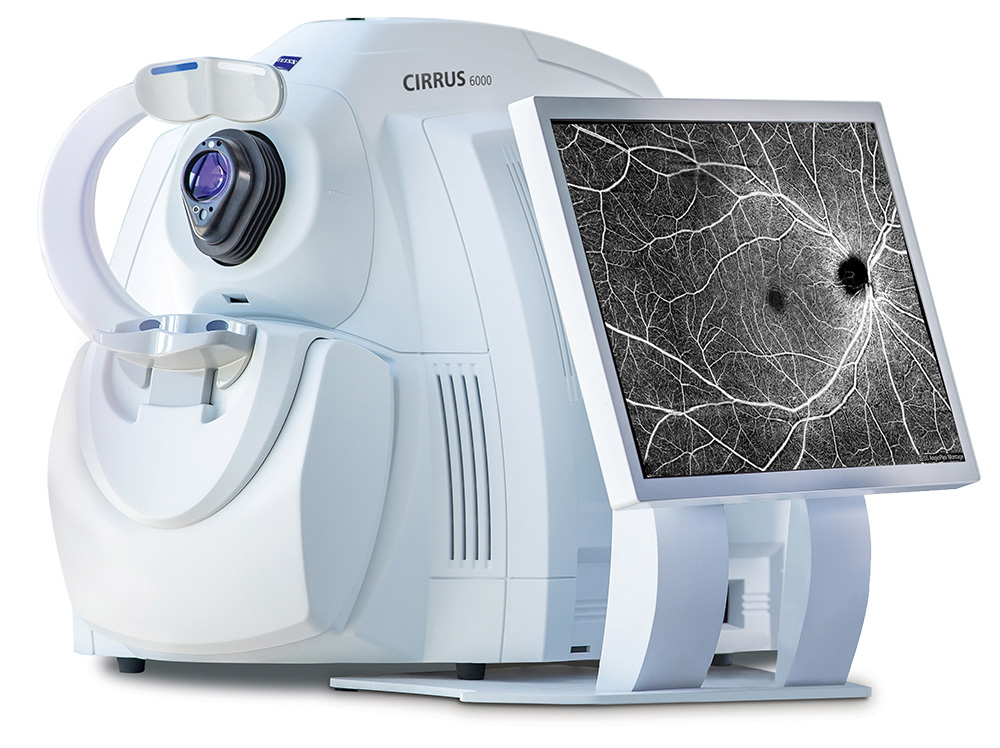
Optical Coherence Tomography (OCT) is also commonly used and the latest versions of these devices are available at Prism Eye Institute. This high-tech equipment produces a highly detailed image of the layers within the eye within minutes. Your doctor will use OCT to assess the thickness and health of the retina, macula, optic nerve and more, all without even touching the eye. For glaucoma, OCT of the layers around the optic nerve can help your doctor identify glaucoma-related defects before they appear in one’s vision and well before a patient would notice any symptoms.
Clinic Visit with a Glaucoma Specialist
During a clinic visit with a glaucoma specialist, patients can expect a thorough evaluation using various diagnostic tools. The specialist will discuss treatment options, which can range from prescription eye drops to laser procedures and surgical interventions.
Glaucoma laser procedures are non-invasive, done in the office and patients can go home the same day. SLT laser is used when angles are open and lowers eye pressure by stimulating cells inside the eye to clean the drain (trabecular meshwork). Iridotomy is used to help open narrow or closed angles by flattening the iris profile.
Glaucoma Surgery includes a number of surgical options that can help patients achieve additional eye pressure control. Some surgeries are minimally invasive and allow for relatively quick post-surgical recovery. When greater pressure lowering is required, a surgeon may recommend a more involved surgery and recovery can take weeks. Glaucoma surgery is tailored to each patient’s unique situation.
Glaucoma specialist with advanced training in glaucoma surgery can discuss these options with you and recommend the right one for you.
How Do I Get Started









Our Locations
Brampton
- 7700 Hurontario Street, Unit 605
- Brampton, Ontario L6Y 4M3
Monday to Saturday: by appointment only
OUR HOURS
- Monday: 7:30 AM – 6:00 PM
- Tuesday: 7:30 AM – 6:00 PM
- Wednesday: 7:30 AM – 6:00 PM
- Thursday: 7:30 AM – 6:00 PM
- Friday: 7:30 AM – 6:00 PM
- Saturday: 8:00 AM – 2:00 PM
- Sunday: Closed
Mississauga-Oakville
- 2201 Bristol Circle, Suite 100
- Oakville, Ontario L6H 0J8
Monday to Saturday: by appointment only
OUR HOURS
- Monday: 7:30 AM – 6:00 PM
- Tuesday: 7:30 AM – 6:00 PM
- Wednesday: 7:30 AM – 6:00 PM
- Thursday: 7:30 AM – 6:00 PM
- Friday: 7:30 AM – 6:00 PM
- Saturday: 8:00 AM – 2:00 PM
- Sunday: Closed
Our Brampton Reviews
Our Mississauga-Oakville Location
Gallery